In a world that rewards speed, noise and instant answers, silence can feel uncomfortable — even risky.
But what if sitting in that silence could be one of the most powerful leadership tools in your lineup?
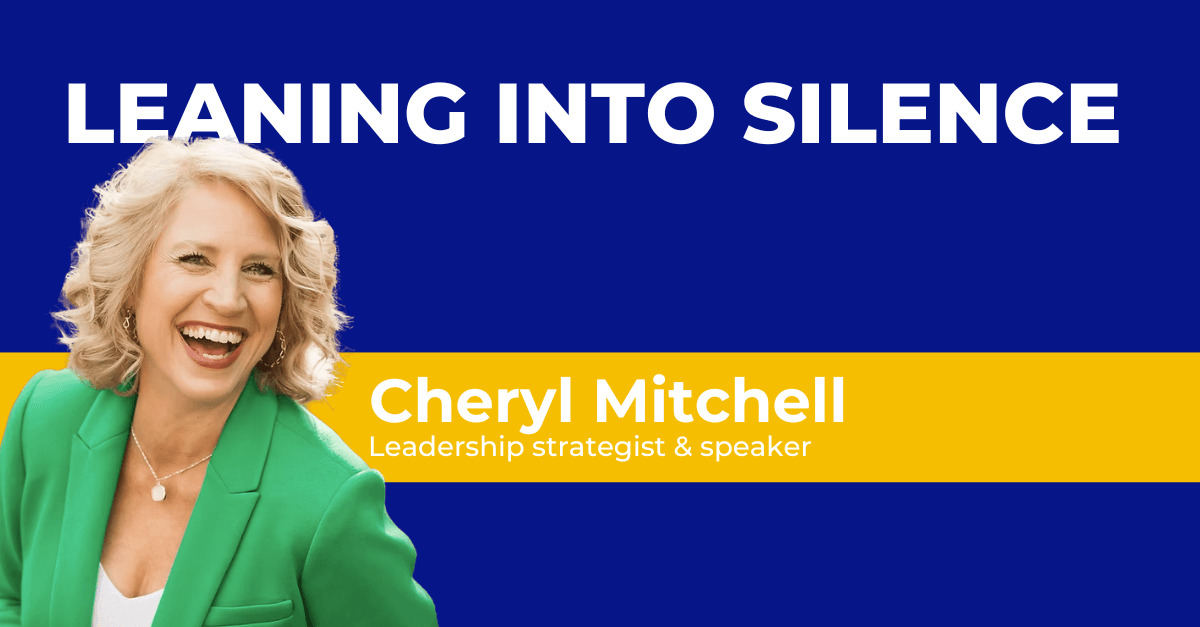
Cheryl challenges leaders to stop filling every gap in conversation and start using silence with intention.
Why Leaders Struggle With Silence
Most people aren’t uncomfortable with talking. They’re uncomfortable waiting.
“I’m a fast thinker, fast talker, fast mover. Pausing doesn’t come naturally to me.”
Silence can feel awkward. It can feel like a loss of control. But when leaders rush to respond, they often miss what people are really trying to say.
“If you pause, people tell you more.”
Silence Creates Safety and Truth
When a leader resists the urge to jump in, something shifts.
People feel heard
Defensiveness drops
The real issue surfaces
“When I slow my body down and get curious instead of judgmental, people lean in instead of pulling back.”
Silence signals presence. It tells the other person: I’m here. I’m listening. You matter.
How to Practice Silence as a Leader
Silence doesn’t mean disengagement. It means intentional restraint.
Try this:
Ask one question, then stop talking
Hold eye contact and let the pause sit
Resist filling the space, even when it’s uncomfortable
“Listening without a response already formed is one of the most underrated leadership skills.”
The Takeaway
Silence isn’t passive. It’s active leadership.
When leaders create space instead of noise, they unlock trust, clarity and connection, especially in moments of tension or uncertainty.
Sometimes, the most powerful thing a leader can say… is nothing at all.
Learn more
Cheryl Mitchell joins The Cultivating Leaders Podcast to unpack what it really takes to lead through uncertainty — especially in food and agriculture. Cheryl shares how leaders can slow down, listen differently and choose clarity when the noise gets loud.