For many professionals, career growth can feel like a ladder: one promotion, one title change, one step up at a time.
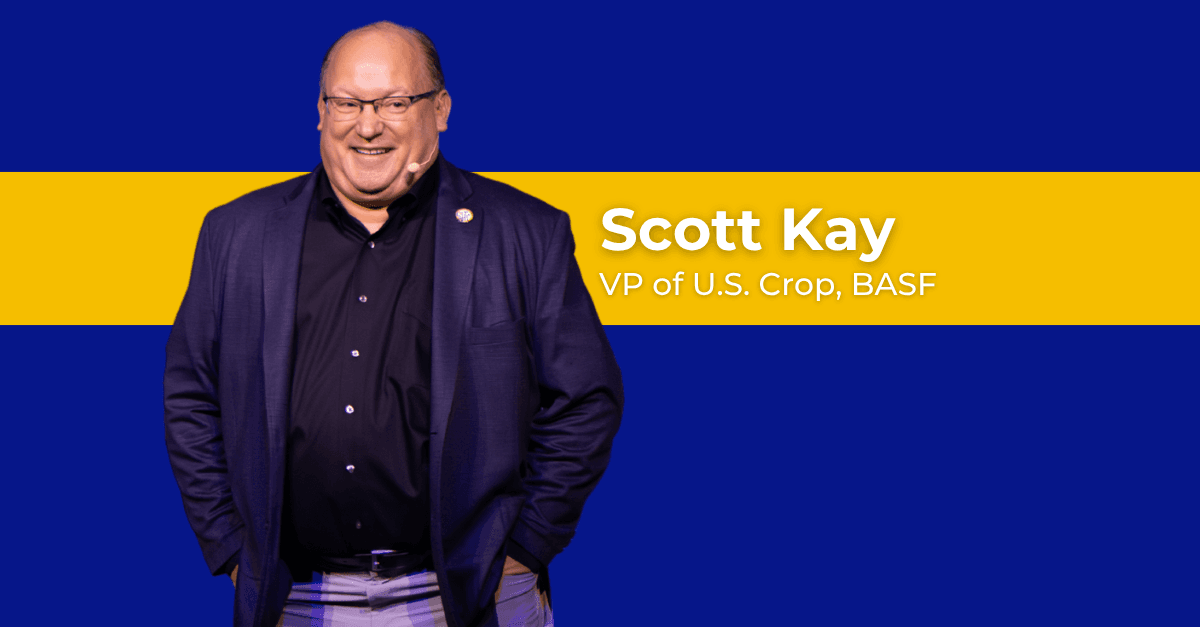
But for Scott Kay, Vice President of U.S. Crop at BASF, the path to leadership looked a little different.
Over nearly 35 years with BASF, Scott has held roles across sales, marketing, business operations, logistics and supply chain, and even led the company’s Canadian business before stepping into his current role. Today, he leads around 400 people across sales, marketing, technical services and business operations.
And here’s the honest takeaway: lateral moves helped him get there.
1. Lateral moves build range
Scott shared that he has held nearly all of the types of roles that now report into him. That experience matters.
Why?
Because when you have worked across functions, you understand how decisions ripple across the business. You understand how teams depend on each other.
As Scott put it, his time in logistics and supply chain was “very foundational” because “how people receive your brand once it’s been sold” is also a critical part of the business.
That kind of perspective does not always come from moving up quickly. Sometimes it comes from moving sideways with intention.
2. Lateral moves create better leaders
Scott was honest about how easy it can be, especially in mid-career, to feel impatient.
He said mid-career professionals can get trapped thinking: “I’m not accelerating fast enough. I’m not getting to the next job. I didn’t get promoted.”
That feeling is real. But Scott also learned that the “next step” is not always a promotion. A mentor helped him see there were more things he needed to learn before jumping into management.
Lateral role changes build both breadth and depth. They give you more stories, more context, more problem-solving reps and more credibility when you eventually lead across the business.
3. You can’t lead what you don’t understand
Scott’s current role is broad. He is responsible for teams across multiple areas of the U.S. crop business.
What makes him effective is not that he knows everything. It is that he has lived enough of the business to know how the pieces connect.
When you have been a marketer, worked in the field as a salesperson and spent time in operations, you can “talk the talk” because you have “walked the walk” with the people you lead.
That experience has helped Scott know when to offer support, when to step back and when to say, “You can lean on me.”
That is the kind of leadership people trust.
4. The goal is not just promotion. It is preparation.
The biggest mindset shift?
Stop seeing lateral moves as delays. Start seeing them as preparation.
Scott believes those moves may “accelerate you more than you think” because they help you understand what failure looks like, how to turn things around and what to consider next.
By learning enough about the business, the customer, the team and the process to make better decisions when the stakes get higher.
Catch the Full Conversation
Scott’s story is an honest look at career growth, lateral moves and the value of learning a business from multiple angles. From sales and marketing to logistics, supply chain and business operations, his journey shows how moving across a company can build the perspective, credibility and confidence needed to lead at a higher level.
Listen to the full episode of The Cultivating Leaders Podcast to hear more of Scott’s insights on building teams, asking better questions, embracing feedback and why the smartest career paths are not always straight lines.