The first year of your career is one of the most formative seasons of your life. It can also be one of the most challenging. You spent the last four years planning around syllabi, striving for high grades and following clear rubrics.
Suddenly, you step into a world without standardized expectations. The structure disappears. The feedback is less direct. And success often feels undefined.
Yet, this first year quietly shapes your future—your confidence, your habits, your professional identity, and even how you view leadership.
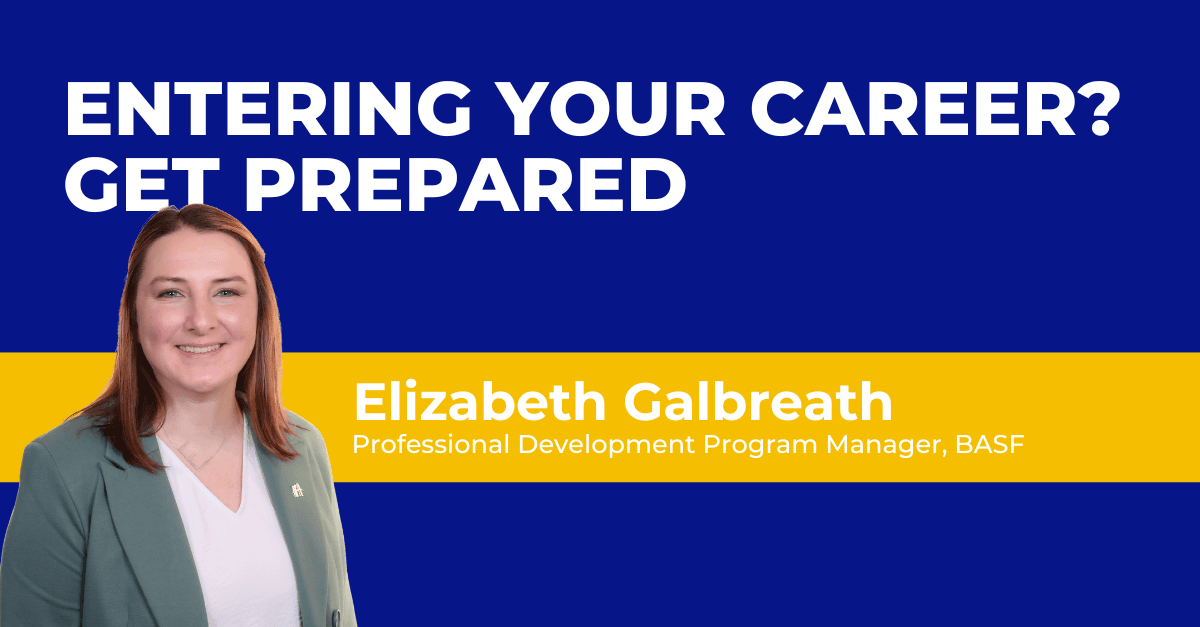
Elizabeth Galbreath has been there. She was also a high-achieving student who wanted to build a successful career. Learning from her trials and successes, Elizabeth has devoted her career to building the bridge for the next generation of agriculture leaders.
The insights below are designed to help you enter your career with clarity, intention and the tools to make the most of your very first year.
1. Your First Year Is About Credibility
Many students enter the workforce focused on flashy job titles, high salaries or quick promotions. Elizabeth challenges young leaders to focus on what they can genuinely gain from their first job.
“The first few years of your career are about building credibility and experience.”
What this means for you:
Focus on all that you can learning about the industry, leadership or niche
Say yes to growth opportunities (even the not-so-glamorous gigs)
Learn to set healthy boundaries (see tip #3!)
Focus on developing hirable skills
Have crucial conversations with your manager about what success looks like for you
2. Learn the Human Side of Work
The technical skills are easy to learn. You were hired because of your knowledge of the systems and processes in your field. But leadership, communication, and relationships are the skills that help you advance.
“You can always learn the technical skills, but I don’t think any of us ever fully master the human side.”
Why this matters early in your career:
Your ability to work with people will set you apart
Self-awareness is just as important as competence
Growth doesn’t stop at graduation
3. Know Yourself
Great leaders know how to manage themselves. They are intentional about reflection. They show up well every day. They lead themselves with integrity. All traits that you can start developing on the first day of your job.
“Leadership isn’t just about making other people better. You have to show up for you and take care of you before you can do that for other people.”
For early-career professionals, this looks like:
Learning how you respond to stress
Setting boundaries before burnout hits
Understanding your values early
4. Learn to Embrace Uncertainty
The workplace doesn’t come with a syllabus. There are no clear due dates or rubrics. Elizabeth described this transition as learning to “embrace the gray.” Decisions will change. Plans will shift. You won’t always have all the information you need. Your response can impact the situation.
How to handle it:
Ask questions and be curious
Focus on the next step, not the perfect plan
Remember: uncertainty doesn’t mean you’re failing
5. Ask Questions—and Ask Them Early
One of the biggest challenges Elizabeth sees with early-career professionals is unmet expectations. Her solution? Develop a relationship with your manager where you can ask relevant questions, share your expectations, and review progress.
It is important to realize:
Raises and promotions don’t happen automatically
Managers can’t read your mind
Clarity prevents frustration
Questions to ask early:
“What does growth look like in this role?”
“What would make someone promotion-ready here?”
“How can I exceed expectations in my first year?”
6. Build Genuine Relationships
Networking isn’t about collecting business cards, it’s about genuine connections. Your first year in your career will be filled with meeting new people, developing relationships with your coworkers and networking socials. Take this opportunity to build your network and invest in relationships.
“There’s just something really beautiful about believing in people and giving them an opportunity to turn into something that they never expected for themselves.”
Pro tips for your next networking event:
Ask people about their story
Be curious, not transactional
Follow up without asking for something immediately
Green flag: asking thoughtful questions
Red flag: only reaching out when you need something
Your first year is about progress.
Your are not expected to have all the answers. But, you are expected to learn how to ask better questions, build trust and develop yourself.
Your first year in the workforce will lay the foundation that will support the rest of your career. Elizabeth’s steps will help you survive your first year and help you grow with purpose, confidence and resilience.
By embracing the challenges this first year might throw your way, you set yourself up for a career that’s meaningful, sustainable and impactful.
Learn more
In the latest episode of The Cultivating Leaders Podcast, Elizabeth Galbreath, Professional Development Program Manager at BASF and the 2025 AFA Bridge Builder Award recipient, reflects on how believing in people, embracing uncertainty, and leading with authenticity can shape careers and cultures.