There is an animal welfare issue at your farm and the local media is criticizing your working conditions. A nitrogen spill has impacted your community’s water supply. A worker was injured while handling livestock and activists take action.
In food and agriculture, these moments happen unexpectedly and all too often. Once it starts, there’s no pause button. What leaders do in the first hours of a crisis often shapes trust, credibility and outcomes for years to come.
Understanding crisis communications matters. When pressure is high, emotions are heightened and information is incomplete, leaders must rise to the occasion. The difference between organizations that weather crises and those that spiral often isn’t resources or size. It’s whether leaders have done the work before something goes wrong.
This mindset reframes crisis communications entirely. It’s not about scripts or statements. It’s about clarity, trust and leadership fundamentals that allow teams to respond when it matters most.
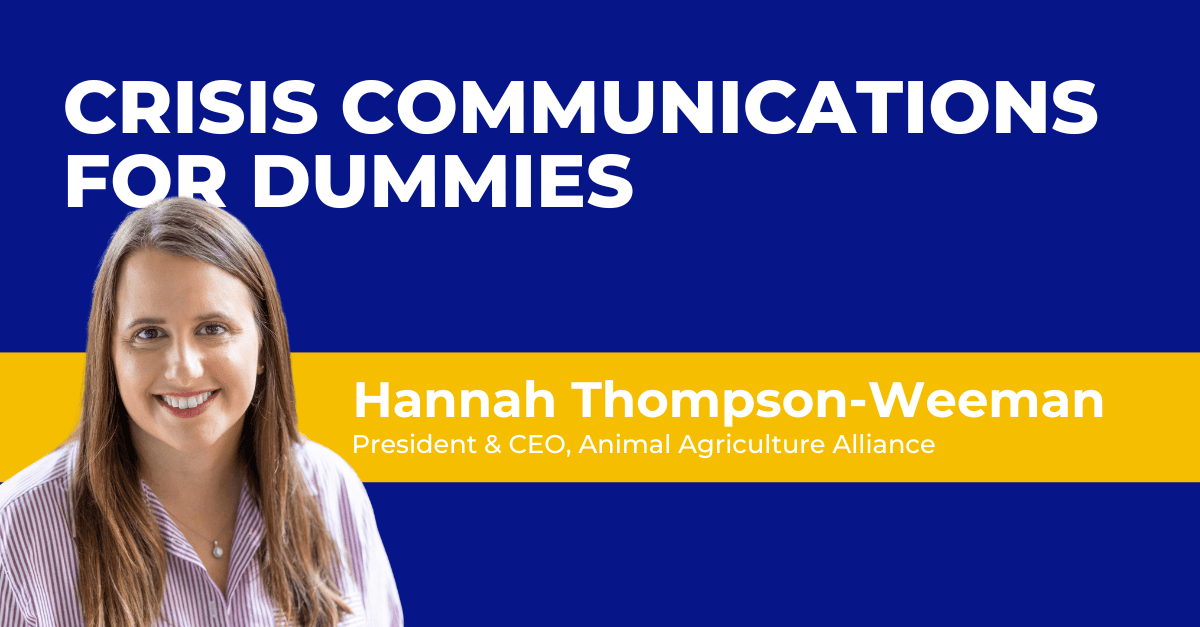
Hannah shares the no-jargon, no-panic tools to prepare for a crisis. Consider it crisis communications for dummies and leaders who want to be ready.
1. A crisis plan is about speed, not perfection
In a crisis, rushed reactions can make things worse. The goal of crisis planning isn’t to script every scenario. It's to give the team a framework and direction.
“Crisis planning is all about allowing us to react more quickly.”
A simple plan answers basic questions before emotions take over:
Who needs to be notified?
Who is responsible for decisions?
Who speaks — and who doesn’t?
What resources do we already have ready?
Take action:
Create a one-page crisis contact list and response framework. Keep it updated. If nothing else, this gives your team a starting point when pressure is high.
2. Build trust before you need it
One of Hannah’s most powerful leadership concepts is the idea of a “trust bank.” Leaders make deposits long before a crisis ever occurs through transparency, community engagement and how they treat their people.
“Every time you have a positive interaction, you’re making deposits into your trust bank.”
When something goes wrong, that trust determines whether people give you the benefit of the doubt or assume the worst.
Ask yourself:
What are we doing right now to build goodwill? That might look like employee communication, community involvement or proactively sharing your values and practices.
3. Not every leader should be the spokesperson
In moments of crisis, many upper-level leaders assume they must be the face of the response. Hannah cautions against that instinct.
“The spokesperson might not be the CEO. It depends on the situation.”
Sometimes the most credible voice is an employee, a local leader or someone directly impacted. Effective leaders know when to step forward and when to step back.
Pro Tip:
Identify potential spokespersons before a crisis happens. Match the message to the messenger.
4. Don’t let emotion amplify the problem
Crises feel personal, especially in agriculture, where work is deeply tied to identity and values. But reacting emotionally can unintentionally fuel the fire.
“Sometimes we get really fired up and emotional, but that can actually add fuel to the fire.”
Over-communicating, responding in the wrong channels or addressing issues that haven’t gained traction can make a small issue much bigger.
Remember:
Pause before responding publicly. Ask: Who needs this information, and where? Not every issue deserves a global response.
5. If you wouldn’t stand behind it publicly, rethink it
Crisis communications can’t fix poor culture or questionable practices. The strongest protection is doing the right thing consistently and being willing to explain why.
“There shouldn’t be anything on our farms or in our companies that we wouldn’t want live-streamed on Facebook or on the front page of the New York Times.”
Get real:
Identify the areas your organization might be questioned on. Make sure you can clearly articulate the value and purpose before someone else defines them for you.
Take time to prepare
Crisis communication isn’t a communications problem. It’s a leadership test.
The goal isn’t to avoid hard moments. It’s to meet them with integrity, discipline and humanity.
Leaders who invest in culture, trust and clarity long before a crisis are better equipped to protect their people, their communities and their organization when it matters most.
Learn More
Hannah Thompson-Weeman, President and CEO of the Animal Agriculture Alliance, joins The Cultivating Leaders Podcast to share practical leadership lessons on crisis preparedness, trust-building and navigating high-pressure moments in food and agriculture. Her work focuses on helping leaders prepare for the conversations they hope never come and respond with clarity when they do.